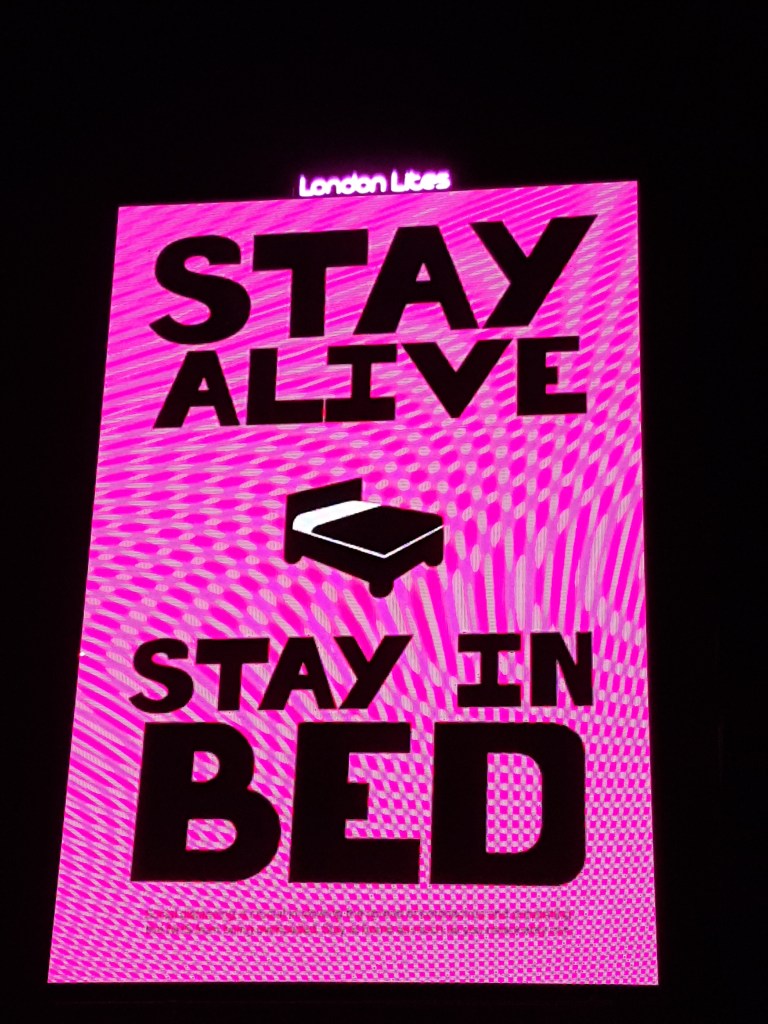
The covid-19 crisis has awoken the government, after a decades-long slumber, to the idea of providing public health information. And it has gone at it with some zeal: announcements on television and radio, in newspapers and on social media – and on billboards and large digital displays. Some are striking in their power and simplicity, laced with rye humour.
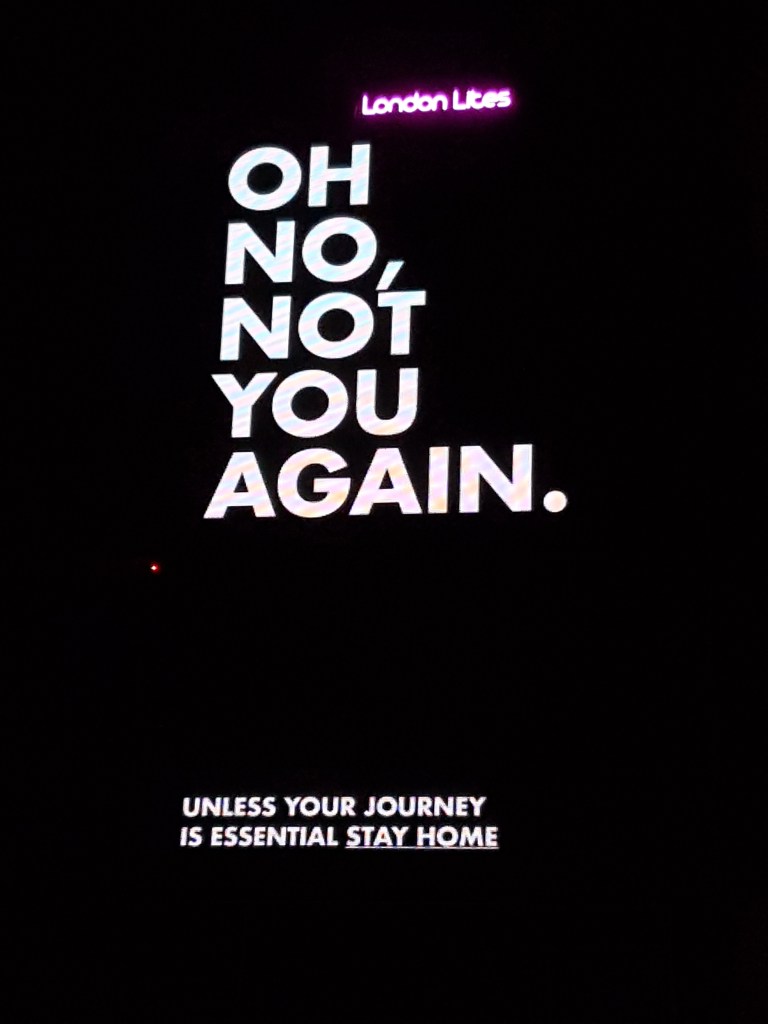
I suspect they are effective; ironically, hardly anyone will see the billboards if they are doing their job.
Yet this current campaign, probably uncontroversial in its purpose and necessity, begs the question why the government had not, until a couple of weeks ago, considered telling the public anything in such ways for years and years. We have a climate crisis brought about by our own behaviour. We have illegal, excessive air pollution in our cities caused in large measure by our use of private vehicles. Our love of flying is very harmful. All the science says that we need to act immediately to slow (forget reverse) climate change in time.
However, we have seen nothing from central government in terms of public guidance or education. No encouragement or admonishment. The Mayor of London has, in the last year or two, put out posters recommending public transport and walking and cycling (often displayed on the tube – preaching to the converted, surely). And many London boroughs, as well as cities like Oxford, are running public awareness campaigns about issues like idling engines. All to be welcomed of course.
But the broader, more fundamental crisis we face, which can be tackled only by national government? Not a peep.
You want to fly to Europe once a month for an exciting city break? You want to drive your children the mile to school in your Range Rover every morning? You want to buy a ton of concrete to pave over your front garden? The government is not going to say a word to you. It’s a free world, no?
The Covid-19 crisis is immediate and threatening, no doubt. But the climate crisis certainly poses a greater existential threat. Arguably it also requires more education of the public in that it seems more abstract and distant: it’s very hard to grasp that that hen weekend in Budapest (just six of us taking cheap flights! Once in a lifetime!) contributes significantly to a wider problem and might be disproportionate. Or that the gridlock traffic is composed of individuals all as decent, sensible and hardworking as you, all with their personal reasons for jumping in the car that day – or that your child strapped in the back might be coughing precisely because you and all the others are driving instead of walking.
So I was heartened to read that I am not alone in thinking that it is time that we started to put health warnings in places associated with fossil fuel use. This week a group of public health academics and professionals wrote in the British Medical Journal precisely along these lines. They advocate warnings on petrol pumps, airline tickets and energy bills, reminding consumers of the connection between fossil fuel use and the health issues associated with climate change. They point out that such warning signs are quite cheap interventions and target the people most responsible for harm.
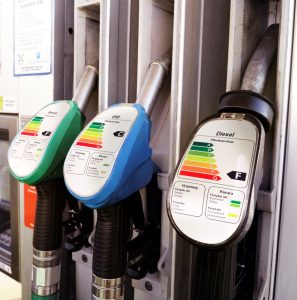
The BMJ article is definitely worth reading.
I think we must learn from this pandemic, and not simply go back to the old normal. Now that the government has rediscovered the utility of giving the public advice, it should keep it up, particularly in relation to the great crises of global warming and pollution.
 Bye bye car. Hello clean, friendly city